Top 3 Summer Motorcycle Helmets for the Moroccan Heat
I'll be straight with you. Last summer, I saw a guy pull over on the side of the road on the Ourika route. Sitting on the ground, helmet next to him. No crash. No breakdown. He was just overheated. Couldn't go any further. It was 39°C, and he had been riding for three hours with a full-face helmet designed for mild European weather. We waited 40 minutes for him to recover.
When your brain overheats, it doesn't give you a warning. First you lose focus. Then your reflexes slow down. And on the Casablanca–Marrakech highway in August, with trucks overtaking and the asphalt shimmering in the heat — that's how things go wrong.
We've been riding in Morocco for years. Here's what we've tested, what actually works, and what let us down.
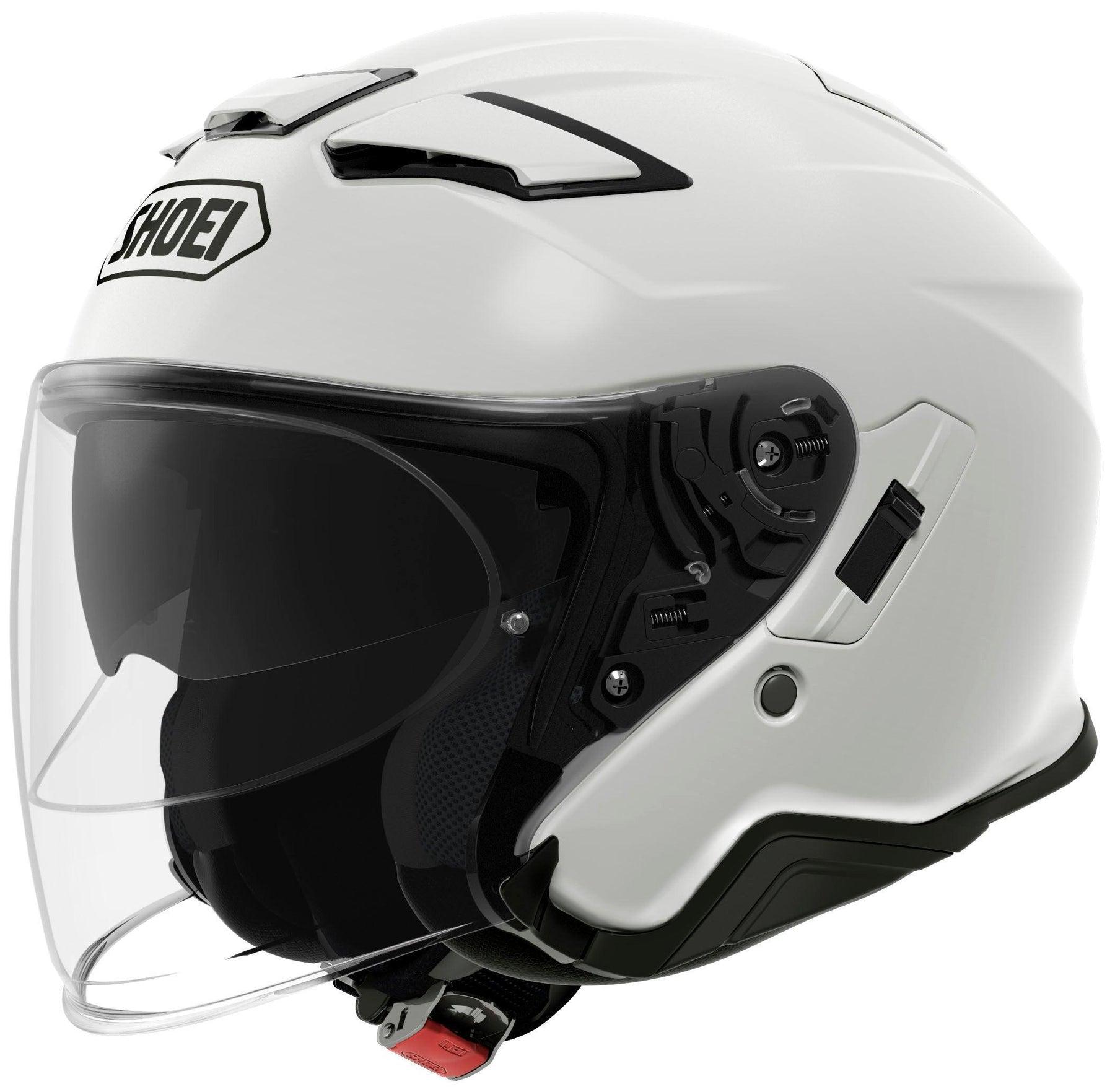
1. Shoei J-Cruise II — the city helmet, no debate
In the medina, filtering through traffic on Mohammed V Avenue, a full-face helmet turns into a pressure cooker. The J-Cruise II is the first premium jet helmet we recommend without hesitation for that kind of use.
The ventilation is real. Not just on paper — real at 30 km/h in traffic. The internal sun visor drops down with one movement, even with gloves. On the highway in the morning, when the sun hits you straight in the eyes, this is the feature you use the most. The 3D dry-fit lining manages sweat well — after five hours in 40°C heat, it's still bearable.
The AIM+ shell does the job. Nothing more to say.
What we like: the field of vision. Wide and clear. The micrometric chin strap you can adjust with thick gloves — a small detail that makes a big difference when you need to adjust it at a red light. And the price, still reasonable for a Shoei.
What bothers us: 1,490 g. For a jet helmet, that's not light. After a full day in the mountains, your neck reminds you. And the sun visor mechanism doesn't like fine desert sand — we learned that the hard way on the track between Zagora and M'Hamid. You have to clean it after every dusty ride.
Check the price of the Shoei J-Cruise II →
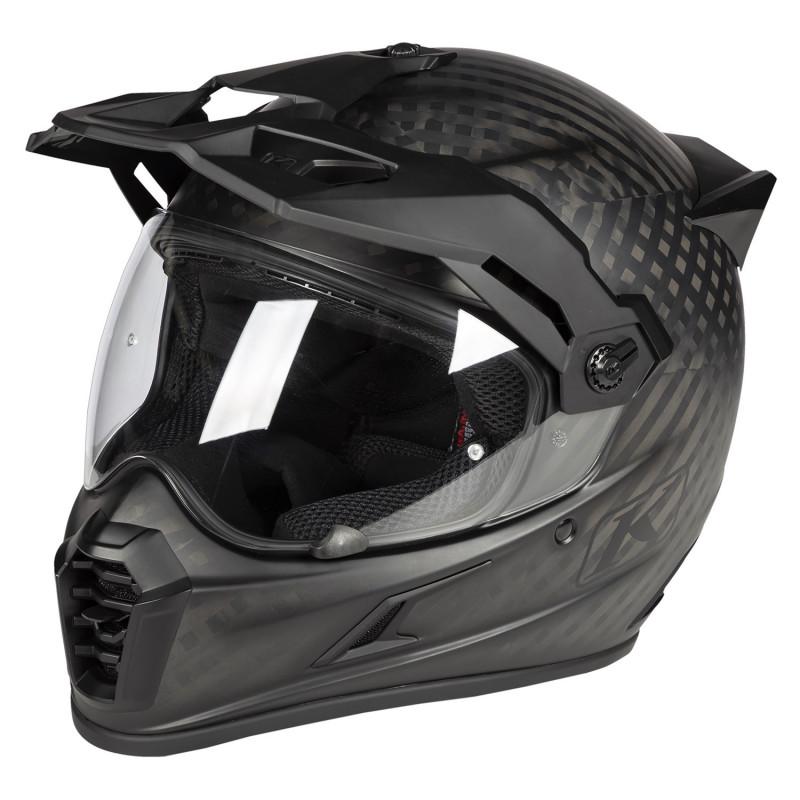
2. Klim Krios Pro — the one you never take off in the mountains
The first time we picked it up, we thought it was empty. 1,350 grams. Carbon shell with Koroyd structure — a network of welded polymer tubes that absorb impacts progressively. More effective than traditional EPS for rotational impacts, which are the most dangerous.
I rode the Tizi n'Tichka pass with this helmet in July. Out and back in one day. 220 kilometers. Heat at the bottom, wind and cold at the top, dust everywhere in between. That evening in Marrakech, I didn't have neck pain. First time ever on that road.
The ventilation is aggressive. 5 intakes, 4 exhausts. Airflow works even at low speed — not just at highway speed. The field of vision is almost panoramic. The shell handles crosswinds without moving.
What we like: the weight. Not just on paper — in real use, over a full day, it makes a difference. The feel when you put it on. And the stability in the Atlas descents with crosswinds.
What bothers us: wind noise above 110 km/h. On the highway, earplugs are not optional. And the price — it's the most expensive in this comparison. Fine sand from the Draa region can damage the visor mechanism if you don't clean it properly.
Check the price of the Klim Krios Pro →
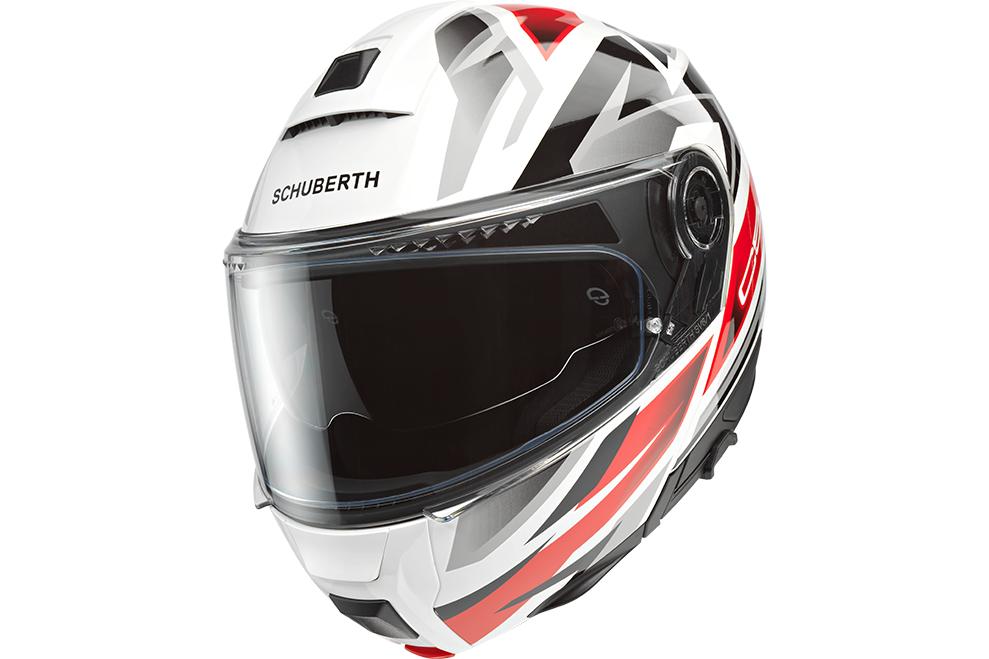
3. Schuberth C5 — the modular that doesn't feel like a modular
Modular helmets usually come with compromises. Heavy. Noisy. Unstable at speed. The C5 is the exception.
We used it on a Marrakech–Essaouira–Agadir–Taroudant loop. City traffic, highway, mountain passes, coastal roads. The kind of trip where you want to open your helmet with one hand at a red light and close it again before moving. That's exactly what the C5 does. Effortlessly. Even with gloves.
The fiberglass shell is solid. Wind noise is well controlled — Schuberth knows aerodynamics. You notice it within the first hours. Ventilation can be adjusted while riding. The antibacterial lining holds up over a full week of intense riding — we tested it.
What we like: stability at 130 km/h. No buffeting, no vibration. For a modular helmet, that's impressive. And the one-hand opening system — you use it all the time in traffic.
What bothers us: 1,700 g. The heaviest in this comparison. At the end of a long day in the mountains, you feel it. And like any precise mechanism, it doesn't like fine sand.
Check the price of the Schuberth C5 →
ECE 22.06: not optional
You still see too many low-quality helmets on Moroccan roads. Half helmets. Cheap generic ones. On Moroccan asphalt — which is basically a giant cheese grater in a crash — that's a fatal mistake.
The ECE 22.06 standard includes tests that 22.05 didn't: rotational impact absorption, wider impact zones, chin strap resistance under dynamic load. Rotational impacts are what cause serious brain injuries. Not frontal impacts. At 60 km/h, the difference comes down to millimeters of shell… and years of consequences. Always check the label.
Maintenance in Morocco: two things no one tells you
First, salt. Sweat is more concentrated in hot, dry Moroccan conditions. That salt builds up inside the EPS foam and slowly damages it from the inside. You don't see it — until one day the foam starts breaking apart. After every hard day: remove the liner, rinse with cold water, dry in the shade. Never in direct sun — it warps the thermoformed foam.
Then sand. Fine dust from Tizi n'Tichka and the southern tracks gets into visor rails and vents. If something feels stuck, don't force it. Use compressed air first. It's not the sand that breaks things — it's forcing mechanisms with sand inside. We've seen brand-new helmets damaged in three days because of that.
If you had to pick just one
Mixed road trip — city, road, mountains: Schuberth C5. No hesitation.
Mountain riding and long distances: Klim Krios Pro. The weight makes the difference over a full day.
City and coastal riding: Shoei J-Cruise II. The best premium jet helmet for Moroccan conditions.
This comparison is updated regularly based on new models available on the market.